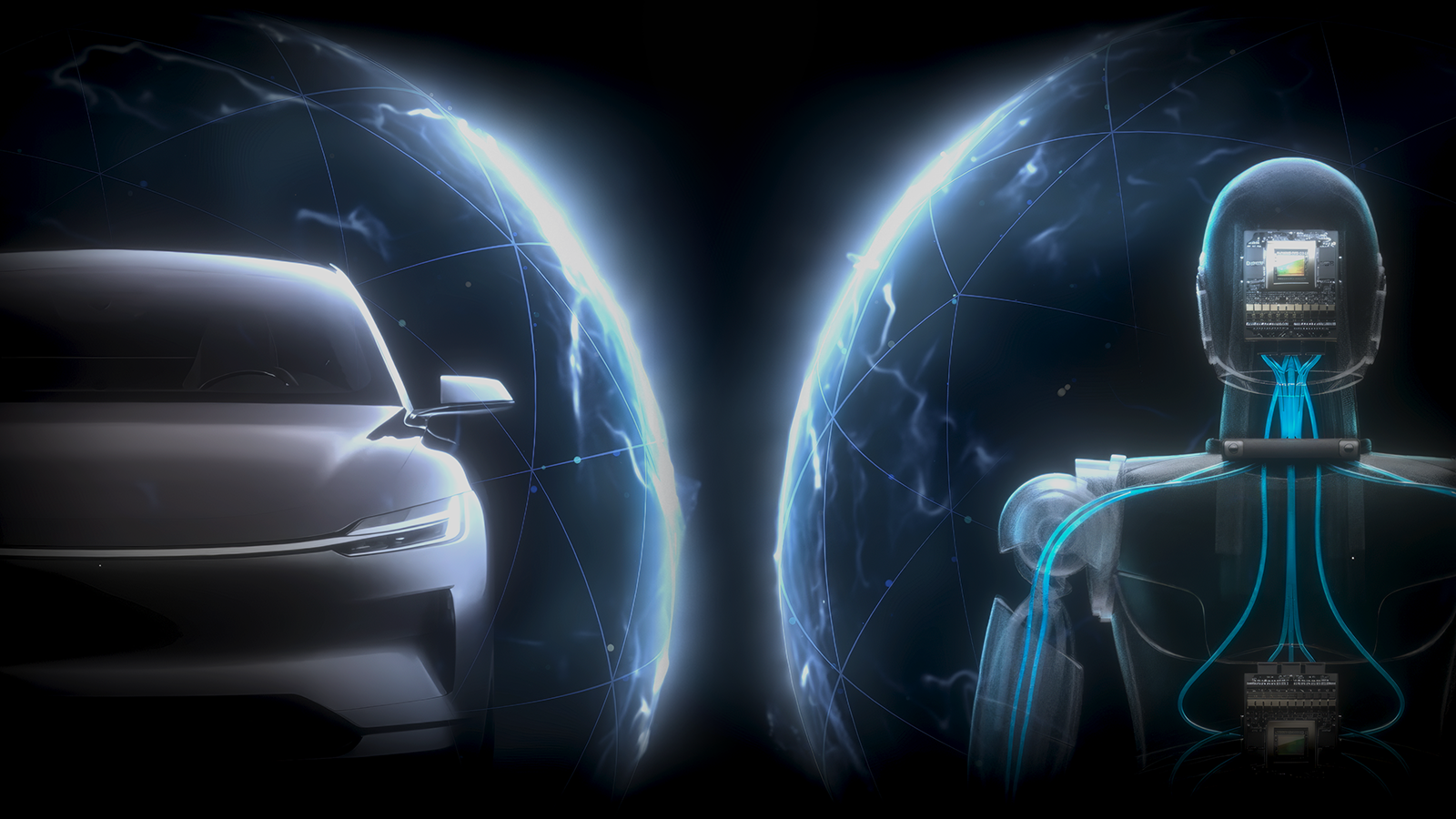
Nvidia Advocates Layered Safety for Physical AI Deployment
Nvidia published a blog post arguing that deploying physical AI at scale requires safety at every layer. It cites ABI Research projecting 49 million level 3-5 autonomous vehicles by 2035 and Omdia estimating roughly 60 million industrial robots deployed between 2026 and 2035, as machines enter roads, factories and warehouses shared with people.
Sources and evidence
Summary last validated Sep 28, 2026
Reader actions
Report an issue
Use this for an incorrect summary, wrong source, duplicate story, or wrong category. Submissions are private and do not change the story automatically.
Related coverage
- industry
Sophos cuts threat investigation time 96% with OpenAI Daybreak
Sophos uses OpenAI's Daybreak to reduce cyber-threat investigation time by 96% and automate 52% of its managed detection and response (MDR) cases, according to OpenAI. The deployment preserves human oversight over the automated investigation workflow.
- industry
MIT center director Rakhlin shares considerations on AI in academia
MIT Statistics and Data Science Center Director Alexander (Sasha) Rakhlin shares important considerations for departments and institutions regarding the best path forward for AI in academia, in an MIT News Q&A.
- agents
NVIDIA Highlights Developers Using Frontier AI Agents With Omniverse Libraries
NVIDIA published a blog post describing how developers combine frontier AI models with NVIDIA Omniverse libraries to build simulation applications. The post says developers direct AI agents to assemble assets, connect physics and rendering, and verify scene behavior, supporting work such as exploring scenarios, investigating failures and improving designs.
- open source
NVIDIA Details Five-Step Workflow for SimReady Robotics Assets
NVIDIA published a five-step workflow for converting CAD assets into SimReady robotics simulation assets using Omniverse libraries, SimReady Foundation specifications, and agentic NVIDIA skills. The process covers configuring and validating materials, collision geometry, joints, and physics properties beyond simple OpenUSD geometry conversion, preparing assets before robot behavior testing.
- agents
NVIDIA KGMON Team Places Second in KDD Cup 2026 Data Agents Competition
NVIDIA's KGMON team placed second in the KDD Cup 2026 Data Agents competition. The team built a system around making an agent's harness smaller, clearer, and easier to verify. The competition required agents to answer natural-language questions across heterogeneous sources including databases, CSV and JSON files, prose documents, PDFs, and briefing videos.