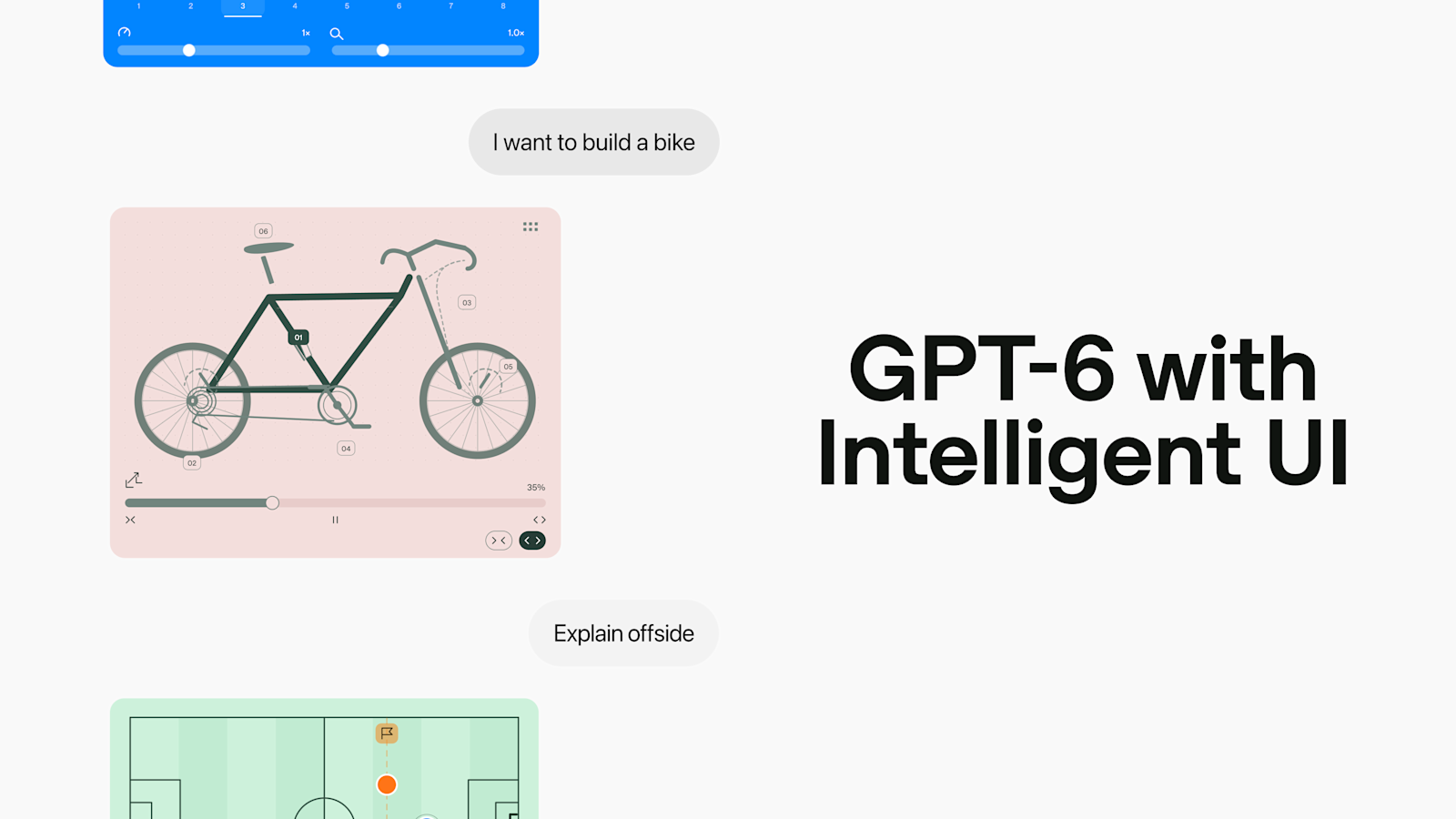
OpenAI rolls out GPT-6 in ChatGPT with Intelligent UI
OpenAI is rolling out GPT-6 globally in ChatGPT, introducing an Intelligent UI that delivers faster responses with visuals and interactive experiences users can explore and use directly.
Sources and evidence
Summary last validated Oct 7, 2026
Reader actions
Report an issue
Use this for an incorrect summary, wrong source, duplicate story, or wrong category. Submissions are private and do not change the story automatically.
Related coverage
- industry
Sophos cuts threat investigation time 96% with OpenAI Daybreak
Sophos uses OpenAI's Daybreak to reduce cyber-threat investigation time by 96% and automate 52% of its managed detection and response (MDR) cases, according to OpenAI. The deployment preserves human oversight over the automated investigation workflow.
- industry
Oracle uses ChatGPT and Codex to speed recruiting, engineering, and operations workflows
OpenAI published a customer story describing how Oracle applies ChatGPT Work and Codex across recruiting, engineering, and operations. According to the post, Oracle uses these tools to turn specialist knowledge into fast, repeatable workflows, compressing tasks that previously took days into minutes.
- industry
Pollo AI uses GPT-5.6, GPT-6 Astra, and GPT-Image-2.5 for ad creation
Pollo AI is using OpenAI's GPT-5.6, GPT-6 Astra, and GPT-Image-2.5 to help creators turn ideas into detailed images and cinematic video ads, according to OpenAI's blog. The post describes how the platform supports campaign creation from concept to finished creative.
- industry
LegalOn cuts Codex costs 65% with task-matched model routing
LegalOn reduced estimated daily Codex costs by 65% while maintaining development speed, according to OpenAI. The legal tech company matched its Astra, Sol, and Luna models to specific tasks and managed budgets strategically, cutting spend without slowing engineering output.
- security
OpenAI disrupts AI-enabled false-front influence operations
OpenAI said it disrupted two AI-enabled influence operations that used false-front journalists and a think tank to spread geopolitical messaging. The company announced the takedowns on its blog, describing the campaigns as using AI to pose as media figures and an institutional research outlet.