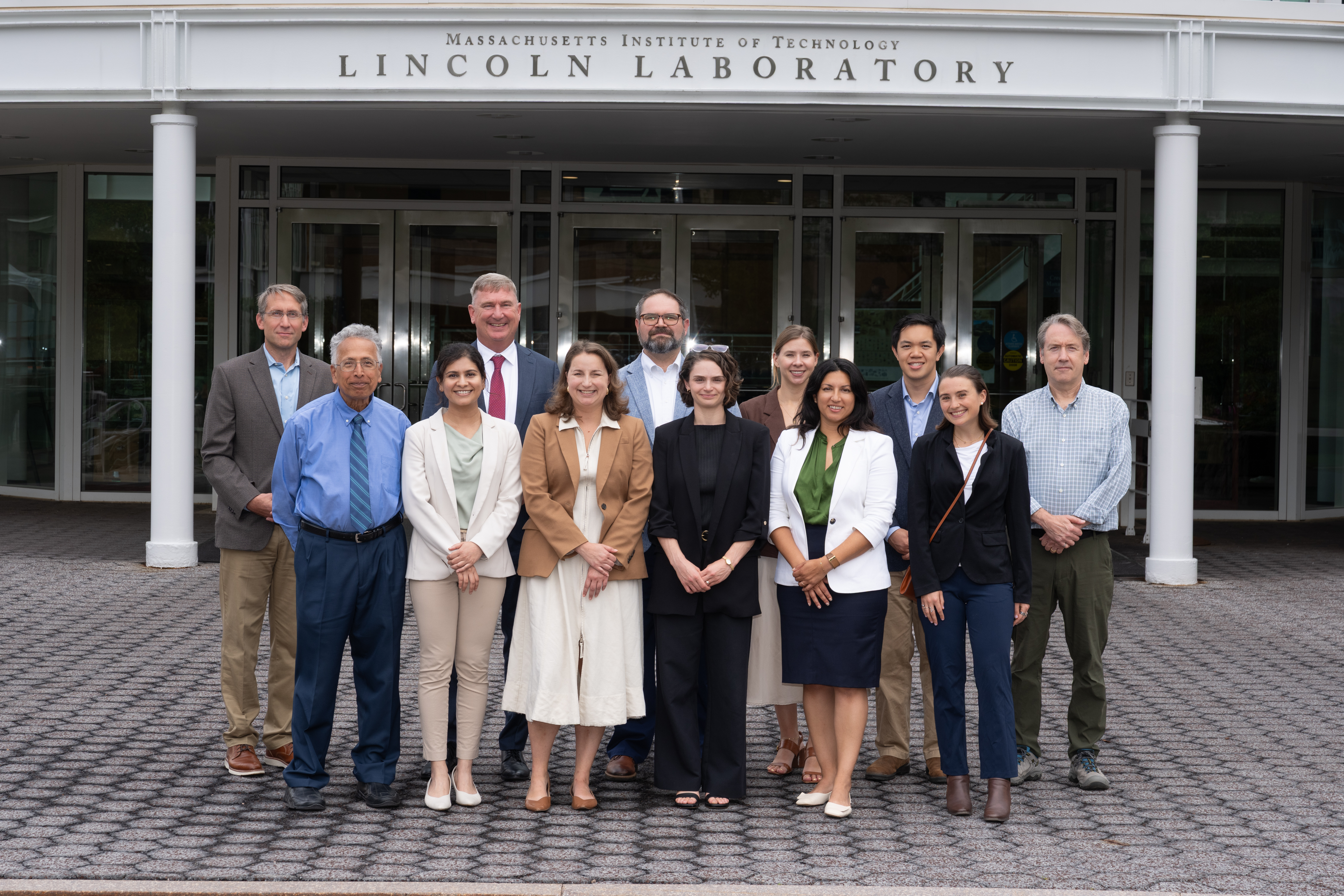
MIT Lincoln Laboratory hosts NSCEB roadshow on biotechnology and national security
MIT Lincoln Laboratory hosted the National Security Commission on Emerging Biotechnology on Sept. 3 for a national roadshow stop. Representatives from state organizations, defense centers, universities, and technology companies discussed how Massachusetts' biotechnology ecosystem can strengthen national biodefense. Congress established the NSCEB in 2022; its April 2025 report called for at least $15 billion in federal investment over five years.
Sources and evidence
Attributed quotes
“We have a lot to leverage in this region to advance biotechnology. Many people are already working together to push the bioindustrial sector beyond biopharmaceuticals and into a broader ecosystem across industries. This synergy is where NSCEB comes in — connecting policy to the real-world work already happening, including here at Lincoln Laboratory and across the state.”
Summary last validated Oct 13, 2026
Reader actions
Report an issue
Use this for an incorrect summary, wrong source, duplicate story, or wrong category. Submissions are private and do not change the story automatically.
Related coverage
- policy
Proposed Rule Would Implement Medicare Part D Provisions From 2026 Appropriations Act
A proposed rule would implement sections 6219, 6220, and 6224 of the Consolidated Appropriations Act, 2026, covering Medicare Part D cost-sharing reductions for low-income individuals, enhanced and accurate provider lists, and pharmacy benefit manager accountability. The Federal Register notice lists the issuing agency as unknown.
- policy
DHS orders removal of DeepSeek products from federal civilian IT
The Department of Homeland Security published notice of an order by the Secretary of Homeland Security excluding Hangzhou DeepSeek Artificial Intelligence Co. and its affiliates from federal civilian agency procurements. The order also requires removal of all DeepSeek and affiliate products, plus third-party products and services built using DeepSeek implementations, from civilian agency information technology systems.
- research
MIT and Boston Children's Hospital develop symmetry-aware AI for fetal ultrasound
Researchers at MIT and Boston Children's Hospital developed a model that teaches AI about symmetry to adjust fetal ultrasound scans on the fly, tracking fetal movement during imaging. The approach aims to make prenatal diagnosis more reliable and could spare families repeat hospital visits when scans are inconclusive.
- policy
USPS proposes new Privacy Act system of records for centralized call center
The USPS is proposing a new Customer Privacy Act System of Records, USPS 830.100, for its Customer Call Center. The system would centralize call center operations to support enhanced agent analytics and improve customer service. The notice, document number 2026-21265, was published in the Federal Register.
- policy
LSC revises Performance Area One criteria to add strategic planning review
The Legal Services Corporation published a notice revising Performance Area One of its Performance Criteria, which it uses to evaluate grant recipients' processes for identifying pressing and emerging legal needs and delivering tailored services. LSC is adding a new criterion assessing strategic planning and revising existing criteria on needs assessments, strategy implementation, and self-examination of effectiveness.