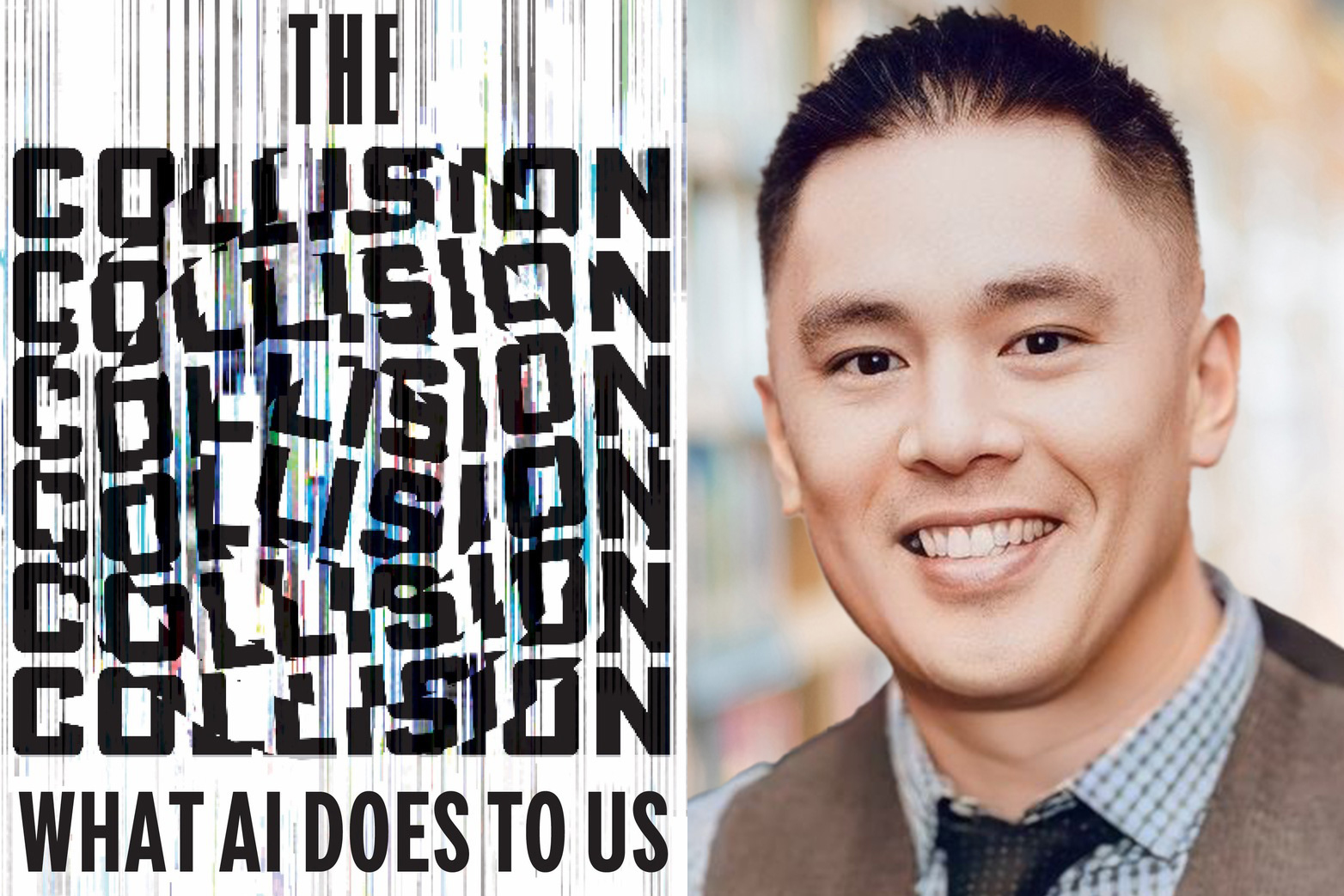
MIT Professor Eric So Explores AI's Collision With the Brain in New Book
MIT professor Eric So has published a new book examining the "collision" between AI, the human brain, and society. The book explores how the technology affects our thinking skills, according to MIT News.
Sources and evidence
Summary last validated Oct 15, 2026
Reader actions
Report an issue
Use this for an incorrect summary, wrong source, duplicate story, or wrong category. Submissions are private and do not change the story automatically.
Related coverage
- research
MIT and Boston Children's Hospital develop symmetry-aware AI for fetal ultrasound
Researchers at MIT and Boston Children's Hospital developed a model that teaches AI about symmetry to adjust fetal ultrasound scans on the fly, tracking fetal movement during imaging. The approach aims to make prenatal diagnosis more reliable and could spare families repeat hospital visits when scans are inconclusive.
- research
Meta details GenRecs tokenization for generative ads recommendation
Meta published an engineering post on GenRecs Tokenization, the data representation layer behind its Generative Recommenders for ads. Meta says the system shifts from scoring every ad to reasoning over ad content and user preferences using LLM world knowledge, with a stable model vocabulary intended to make ad matching more precise and compound gains for advertisers.
- research
MIT researchers give AI models 3D understanding of crystalline materials
MIT researchers published work aimed at helping AI models understand crystalline materials in three dimensions and reason about their properties. The approach targets a gap in how models represent crystal structures, which are typically described in formats that lose 3D spatial information. The research was announced by MIT News.
- research
Google Research grounds AI agents in wet-lab robotics with VERID framework
Google Research outlined three projects bringing AI agents to physical wet labs, including the VERID framework for safe, resource-efficient experimentation grounded in physical measurements. The team demonstrated closed-loop agentic discovery for aptamer and de-novo protein design, reporting single-digit nanomolar protein binders for cancer targets. The work targets gaps in 3D reasoning and slow experimental feedback.
- industry
Kendall Square Association holds 18th annual meeting on technology and shared prosperity
The Kendall Square Association held its 18th annual meeting, where participants explored how new technologies could serve as a force for shared prosperity in society. MIT News reported on the event, which focused on community amid the Cambridge innovation hub's growth.